Free Vitamin Sea And The Premium Blue Space Effect

If you’re reading this blog post, most likely you live on the blue planet as well and you need vitamin sea more than you think.

I’ve been living my whole childhood near water as I gazed through the window from my blue-decorated room filled with 4 aquariums at a time (yes, four!) and when I moved to a big, crowded, landlocked city I didn’t know what was missing, even as I had all the cognitive stimulation I craved for so long. Unfortunately, I still don’t live near water for reasons that I can’t fully control, but I schedule time to be around or in water as much as possible.
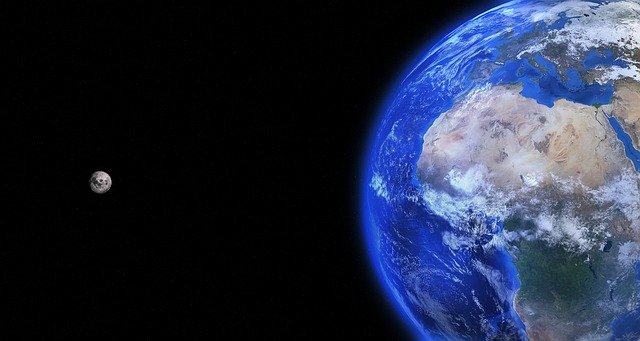
Blue planet image to underline the importance of the blue space effect and vitamin sea for human health
Image by Arek Socha from Pixabay
Image by Arek Socha from Pixabay 

Blue spaces include any body of water such as a fountain, a hot spring, a pond, a lake, even a sea or an ocean if you live in a coastal area. Being near them for extended periods of time has several health benefits:

  • You are more likely to walk if the space around you is beautiful, wide and open. If you walk more, you are less likely to mismanage your weight.
  • You are likely to breath better from all the mist of a water environment, especially if you breathe in that salty sea breeze.
  • Your mental health is likely to be better overall whether that is due to the sense of calm blue spaces induce when being around them or due to the increased rate of water-related activities such as swimming, surfing or sailing.

Sailing boat image to underline the importance of vitamin sea and the blue space health benefits effect
Image by Pexels from Pixabay 

The impact of all these premium health benefits on humans describe the blue health effect and ever since I found a name for it, I not only took the liberty to go to the seaside more often, I also took this into consideration when creating my type of art: marine Ikebana poetry.

Here are the blue space effects I took into consideration while creating my art:

  1. I care about mental health preservation and improvement so I didn’t want my art to shock people or induce disgust. At most, I wanted it to make people reflect on things they may find uncomfortable, sometimes by using complex words, but the visual aspect should never be ugly or disgusting and the overall effect of my art should be to induce calmness. Hence when creating my compositions, I frequently used the golden ratio, lots of open spaces, the wabi sabi philosophy and I included a bit of blue in just about every visual poem I wrote and published.
  2. Not only that I used blue in all of my poems, but the designs themselves are inspired by the seaside, namely the Black Sea coastline which I go to so often. I can’t always stay overnight, but I often go there just to walk a couple of hours by the seaside, be it summer or winter, sunshine or rain or snow, I don’t care. Most of the seashells used in these visual poems were collected from the Black Sea, albeit a few of them were bought from Japan and elsewhere in Asia.
  3. The cleaner the water, the more intense the blue space effect can be. This is the reason for which I brainstormed a lot while soul searching in defining my type of art and a first solution I found was to manufacture everything as print on demand to avoid filling the world with unwanted books, art prints, home décor objects, merchandise or gifts. I already used this business model when releasing my previous three books on gerontology and this time, I wanted to try it in the art field as well.
  4. I don’t wish people spend even more time in front of their computers than they already do for work or leisure or both. Those short walks by the seaside I take are truly one of the rare cases when I’m truly offline and I get so refreshed not only from that fresh salty air, the exercise I get from walking a couple of hours, but also from all the new ideas I get. It is way too easy to be attracted by the digital realm and forget how to inhabit your body and reflect on life. Hence I took the decision to offer my creations as print only. Even if you can view or buy them online, you don’t have to spend time in front of a screen in order to enjoy the hardcover photo book series, the art prints or the homeware.

Some people may dream about reaching for the stars, but reaching for the seaside is good enough for me.
How about you?

Share this post to spread the word!

Black Sea coastline, photo taken by author

How to collect art when you’re a minimalist renter

miniatures, minimalism, art collector, 3d printing

True, collections can get out of hand. Collections can be a huge mess you leave behind. But collections can also make you appreciate art in a tactile way and they allow you to support the artists who made those pieces of artwork possible.
For a long time, I was window-shopping art galleries and antiquities shops. Sometimes, I found way too many beautiful objects. But I avoided to buy anything. Not because I was a scrooge or because I didn’t like the artwork enough, but because I was a renter. Moving from place to place is a hassle. Especially when you switch cities. And after a couple of moves, I remembered that hassle all too well. I managed to find an alternative for my huge collection of paperbacks: an ebook reader. I now read more than ever. But I never managed to find an alternative to visual artwork.
A partial one, yes and its name is Pinterest. But this was not enough for the two reasons I mentioned above: visual art can be experienced differently when you can also touch it. It’s the same with books – I read lots of ebooks, but I’ll still buy print books when I stumble upon a gem of a book. I also wanted to support artists so that I could somehow pay back the experience that they offered me by putting their soul into whatever they created.
When finally there was a solution for all that. It works even if you’re a renter or a minimalist or both. The solution is buying miniature art only and storing it in one easy-to-carry keepsake box.

The world of art is a big one and whatever passes as art is in the eye of the beholder. Having said that, the world of miniatures is full of niches just like the ‘normal’ art world. Just add the word ‘miniature’ in your favorite search engine followed by the keywords depicting your favorite art and/or topic.

Before you do that, here are a couple of types of miniatures:
-miniature sculpture
-miniature painting
-miniature dioramas and scale models
-dollhouses include lots of miniature furniture and other types of interior design objects
-miniature dolls or action figures
-miniature glassware
-miniature pottery
-miniature lapidary art where tiny gemstones are carved into all sorts of scintillating shapes
-miniature floral arrangements like Ikebana
-miniature origami
-miniature resin art
-miniature woodworking
-miniature textile arts like rugs, tapestry, doll clothes
-miniature 3D printing

When you’re looking for miniatures to buy, you’ll notice that the smaller the object, the higher the price. Some pieces of artwork are so tiny that they are created under the microscope! And this is where scales matter. You’ll find these art objects advertised with all sorts of scales ranging from 1:2 to 1:72 and so on. The second number shows the equivalent size of the miniature compared to the size of a normal object (1).

And since this blog focuses on one technique of bringing ideas to life – 3D printing – you can find many miniature objects on the major 3D printing platforms. And even if you don’t find what you’re looking for among those categories, you can always download a 3D model, modify it if it’s not already 3D printable and scale it down to the desired size in whatever 3D graphics software you use. On most platforms, you can scale a 3D model up and down without leaving that website e.g. Shapeways or iMaterialize.

If you know of any other type of miniature art, I’d love to hear from you in the comments!

Same if you have any tips on storing visual artwork while being a renter, especially as a digital nomad.

How to keep your home clutter-free when you just love visual arts

For a long time, I thought minimalism and my love for art didn’t go well together so one had to go. And since having space to live and think was more important to me, I just stopped buying and getting art wherever I lived at that point of time. But that was all about to come to an end as I found three ways to surround myself with beautiful things without cluttering the space I live in. If you are a renter or if you are location independent moving a lot, you must read this.

Minimalism is a skill and like any other, it must be practiced. When I first heard of this concept, my childhood room was full with print books. Lots of them. And moving to college from one place to another was a nightmare. I am thankful that today I am at my 3rd ebook reader and I read even more books than I did back then. If you’d visit my home today, you’d think I’m barely literate as I own very few print books. But I’m still the same bookworm. Reading has been one of those few things where I didn’t change. Many of my previous books were art albums and I admit I haven’t been keen on buying new digital ones as I much prefer text on my basic Kindle. But I found something even better to replace my addiction to beautiful things, at least to images depicting them: I joined Pinterest. And to be honest, that social media website is to be blamed for setting up this blog and getting into visual arts again. I’ve forgotten how much I loved colors and shapes. And unlike Google Images,  on Pinterest I could organize ideas into collections and images are less cluttered too.

A second strategy I used was to admire art outside of my place. And a natural place to start with were museums. But here lies a pet peeve of mine: most times I visit an art museum, it’s actually a museum with only one type of art – painting. Sculptures are a rarity in museums where I live. And decorative arts are even rarer. But all these art pieces are still created and produced, it’s just a matter of time to find them or even to extend the definition of what an art-displaying place is. It could sometimes be a library. Or a botanical garden. Or an abandoned wall turned into a graffiti. Or a niche craft fair whenever there is a public holiday. Or a nice restaurant where the food is not only good tasting, but also beautiful to look at. And since I have a weakness for traditional Japanese arts, I realized that art can be found anywhere and created by anybody and out of any materials. But it’s a skill to notice it.

Which brings me to the third way I enjoy visual arts without hoarding lots of stuff at home. When I had to move into my home, I had to make lots of difficult decisions. I am still the unsympathetic person in the family who says ‘no’ when there is danger to bring clutter in the home  – like a new piece of furniture or whatever. When I moved in, the house was empty and white. Compared to all the other places I lived in, it felt so liberating. And ever since then, I struggled to keep it like that as much as possible. And I had to ask myself what is the minimum number and type of objects I could go by with.  The answer to this has a lot to do with combining minimalism with a passion for beautiful things.
Because at a minimum, you need something to cover your body and some utensils to eat from and with. An unspoken way to own few things in your pristine home and still enjoy visual arts is to embed the latter into functional objects. Instead of walls being adorned with beautiful paintings, try to get those same pictures on objects you use every day – like on a plate or a teapot or a keepsake box. Instead of filling your house or even a dedicated cabinet with sculptures and figurines, try to embed those in three-dimensional objects you need anyway – like a lamp to read in the evening or a centerpiece fruit bowl in the kitchen. The moment you stop using these objects for their functional purpose and use them for display only, you become a collector. Is it worth it? You decide that one.

To sum it up, here are the three ways to enjoy visual arts without cluttering your home:
– go digital and try Pinterest and ebooks and digital arts in general
– admire art outdoors and indoors outside your home – art does exist wherever you least expect it
– buy decorative art objects instead of fine art ones – you need pottery and textiles and some furniture anyway, so why clutter your home with objects which although beautiful, have no other use?

If you’ve managed to enjoy art and still kept your home clutter-free, I’d love to hear from you in a comment below!

How to keep your home clutter-free when you just love visual arts